We have all done that last minute dash back home to get something we forgot. The hat. The insect repellent. The snacks. The esky that is still sitting on the kitchen floor because it was definitely going to fit in the boot.
Australian beach days deserve better than that. Whether you're packing for a solo sunrise swim, a family day at the patrolled flags, or a full-scale summer expedition with every portable item you own, the difference between a great beach day and a fraught one usually comes down to what's in the bag.
This is the checklist. It's broken down by category so you can scan quickly, adapt it to your situation, and never leave the house without the thing you needed most.
A note on sun protection: we've written a lot about UV safety on the Solmates Journal. This checklist reflects those principles — sun protection isn't a single item to tick off, it's a system. We've built it in accordingly.
Sun Protection: The Non-Negotiables
SPF 50+ sunscreen: Broad-spectrum, water-resistant, TGA-listed. Enough for the whole day including reapplications. Cancer Council recommends 35–40ml per full-body application, and reapplying every two hours.
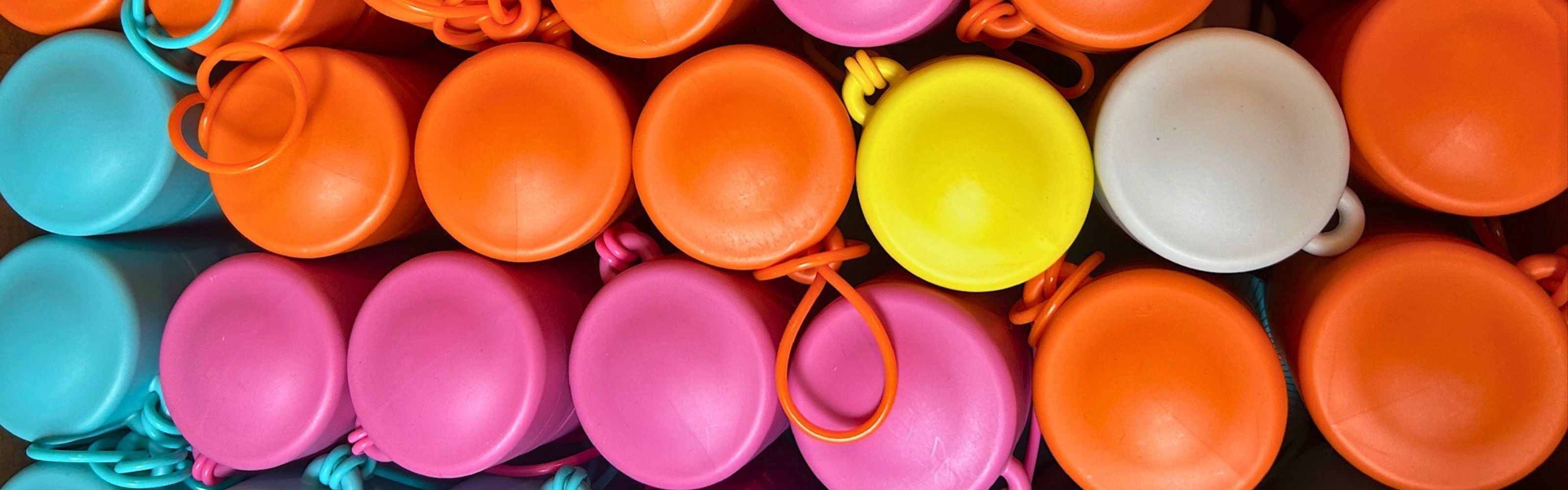
Tip: A Solmates refillable roll-on pre-filled with your favourite SPF 50+ lotion is the cleanest, easiest way to manage sunscreen at the beach. No sticky hands, no rummaging in the bag — the tether keeps it clipped to the outside of a beach bag or pram where it's always within reach. Reef-safe mineral zinc is a great fill for beach days near coral.
Wide-brim hat: Australian standard for UV protection is UPF 50+. Wide brim means the front, back, and sides of the face and neck are covered. A bucket hat or broad-brimmed style beats a cap for whole-face coverage.
Tip: Children under 12 months should be kept out of direct sun entirely — a UPF-rated beach tent or shade structure is essential, not optional.
UV-protective sunglasses: Look for lenses rated to Australian Standard AS/NZS 1067:2016, categories 2–4. Polarised lenses cut glare on water. Kids' sunglasses are just as important, eyes are sensitive to UV from infancy.
Rash vest / UPF swimwear: UPF 50+ rash vests provide more reliable sun protection than sunscreen alone, especially for children who are in and out of the water all day. Pack one per person. Long-sleeved rash vests are the gold standard for young kids.
Tip: A rash vest doesn't replace sunscreen — it protects the areas it covers, but shoulders, lower back, and legs still need SPF.
Beach umbrella or shade tent: Particularly important for infants, older Australians, and anyone with fair or sun-sensitive skin. A UPF-rated beach umbrella provides meaningful shade — but note that UV bounces off sand and water, so shade reduces, not eliminates, exposure.
Lip balm with SPF: Lips are among the most commonly sunburned and most overlooked spots. A broad-spectrum SPF 30 lip balm is small, weightless, and takes up no meaningful bag space. Put one in every bag.
Swimwear & Cover Ups
Spare swimmers: One per person if you're staying more than a few hours or have kids who'll want to get back in after drying off. Quick-dry fabrics mean less time waiting between swims.
Cover-up or sarong: A lightweight cotton or linen cover-up for between swims reduces UV exposure and keeps sand off upholstery if you're heading home. A sarong doubles as a beach blanket, a picnic rug, or a windbreak for a sleeping baby.
Thongs / reef shoes: Hot sand can burn feet — particularly children's sensitive feet. At beaches with rocky entries or reef, reef shoes protect against cuts. Always check underfoot conditions before letting kids wade.
Dry bag or wet bag: For wet swimmers, sandy gear, or any item you need to keep dry. A simple 5L dry bag holds a family's worth of wet swimmers and takes up negligible space in the bag. Essential for anyone using public transport to the beach.
Towels & Comfort
Beach towel: One per person, or a shared oversized towel for a family. Quick-dry microfibre towels pack down significantly smaller than standard terry towels and are lighter to carry — a practical upgrade for regular beach-goers.
Tip: Turkish towels are a popular alternative - they dry fast, double as a sarong or wrap, and pack into a fraction of the space of a standard towel.
Beach mat or blanket: Sand-free beach mats (made with tightly woven fabric that sand passes through rather than sticking to) have become a genuine game-changer for families with young children. Worth the investment if you're a regular.
Portable beach chairs or low chairs: Optional for adults — essential for older family members or anyone with mobility considerations. Lightweight aluminium folding chairs pack down small enough to clip to a bag or throw in a boot.
Inflatable or foam floaties: For supervised water play. Store flat, inflate on arrival. More relaxed beaches often have hire options, but bringing your own means no queue and no rush.
Hydration & Food
Water: more than you think! Heat and sun increase fluid loss significantly. The rule of thumb is at least 600ml per person per hour in hot Australian conditions. Insulated bottles keep water cold for hours — a genuine quality-of-life upgrade in 35-degree heat.
Tip: Freeze water bottles the night before. They double as ice blocks in the esky, then thaw into cold water as the day progresses.
Insulated esky or cooler bag: Essential for any beach day over two hours, and non-negotiable for families with babies or young children who need chilled food. Hard eskies keep ice longer; soft cooler bags are lighter and easier to carry.
Snacks that survive the heat: Avoid chocolate, anything with cream, or foods that turn unappetising when warm. Go-tos: whole fruit, muesli bars, rice crackers with hummus in a sealed container, trail mix, sliced watermelon, corn thins, vegemite sandwiches in a sealed bag. For kids, a frozen yoghurt pouch held in an ice-filled container travels well.
Plates, cutlery, containers: A few sealed containers and a small cutting board take up little space and prevent the 'sandy sandwich' problem. If you're packing for a family, reusable containers are easier to manage than cling-wrapped items that immediately fill with sand.
Rubbish bags: Two minimum — one for general rubbish, one for recycling. Australian beaches are world-class largely because Australians have gotten reasonably good at taking their rubbish home. Be part of that.
If You're Bringing Little Ones
Nappy change supplies: A waterproof change mat, nappies, wipes, and a spare change of clothes. Sandy nappy changes are already an adventure — a mat is non-negotiable.
Baby beach tent or UV shelter: Children under 12 months should not be in direct sun. A portable UV-rated tent or shade structure is the most important item on this list for babies at the beach.
Bucket and spade: Not glamorous, but genuinely one of the best entertainer-to-bag-space ratios of any beach item. A basic bucket and spade set can occupy young children for an entire afternoon.
Beach shoes for kids: Sand temperature on an Australian beach in midsummer can be hot enough to cause burns on bare feet. Always check before letting young children run from a towel to the water line.
Change of clothes per child: Salt water, sunscreen, food, sand — something always ends up somewhere unexpected. One complete change of clothes per child is standard operating procedure.
Health & Safety
First aid basics: Antiseptic wipes, a small bandage, waterproof plasters, and pain relief. Reef cuts, jellyfish stings, and the occasional grazed knee from rock hopping are all more common at beaches than on a park bench.
Insect repellent: Less relevant on open, breezy beaches — more important at sheltered estuaries, lagoons, mangrove-adjacent beaches, and in tropical Queensland at dusk. A small roll-on repellent takes up no bag space.
Aloe vera gel or after-sun: For skin that got more sun than intended. Pure aloe vera gel (kept cold in the esky) provides immediate relief and supports skin recovery. A good habit even on days you think you covered well.
Stinger suit for tropical beaches: At beaches in tropical Queensland, Northern Territory, and northern Western Australia — particularly between October and May — stinger suits (full-body lycra swimwear) are recommended or required for in-water swimming. Irukandji and box jellyfish are present in these waters during stinger season.
Waterproof phone case or dry pouch: Not just for photography — your phone is also your emergency contact, your maps app, and your UV index checker. A simple waterproof pouch from a two-dollar shop is adequate for most beach days.
Entertainment & Extras
Book or e-reader: The original beach companion. An e-reader in a waterproof case is practical; a paperback from a second-hand shop you don't mind getting sandy is equally valid.
Beach games: a football, a cricket set or bat-and-ball paddles. Games that work on sand, don't require shoes, and can involve mixed ages are the best investment for family beach days.
Snorkel set: Australia has some of the world's best snorkelling accessible directly from shore. A basic mask and snorkel takes up minimal space and opens up an entirely different experience at most coastal beaches.
Waterproof action camera: For underwater footage, breaking waves, and the kinds of moments a phone in a pouch can't fully capture. Hire options are available at most popular tourist beaches.
The one thing that should never be at the bottom of the bag: your sunscreen. Hook your Solmates to a bag handle, a pram, or a beach chair tether so it's always visible, always accessible, and always used.
One Last Thing Before You Go
Australia has some of the most extraordinary beaches in the world — patrolled and wild, tropical and temperate, busy and completely empty. The checklist above will serve you at most of them. A few additions for specific situations:
Remote beaches: double the water, add a personal locator beacon (PLB) if you're going somewhere genuinely off-grid, and check the surf conditions via Surf Life Saving Australia's Beachsafe app before entering the water.
Tropical northern beaches (Oct–May): add stinger suit, check local beach safety advice for marine stingers, and swim only in patrolled areas or stinger enclosures where available.
Reef snorkelling or Great Barrier Reef: reef-safe sunscreen only (zinc oxide, no oxybenzone or octinoxate), reef shoes for rocky entries, and a Solmates bottle filled with your reef-safe SPF for easy reapplication between dives.
Now pack the bag. Check the list. And have a good one.