It's a crisp July morning. You've pulled on a jumper, the sky is grey, and you're juggling a coffee and your keys on the way out the door. Sunscreen? That's a beach thing. If that sounds familiar, you're in good company - and you're also putting your skin at risk.
One of the most persistent myths in Australian health is that UV radiation is a summer problem. The truth, backed by Cancer Council Australia, is that the sun's UV rays are present every single day of the year - and in many parts of the country, they're strong enough to damage your skin even in the middle of winter.
"UV radiation can be just as high on a cold or even cold day as it is on a hot one, especially if skies are clear." Cancer Council Australia
Heat ≠ UV: The Biggest Misconception in Sun Safety
Most of us are pretty good at putting sunscreen on when we feel hot. The problem? UV radiation and temperature are two entirely different things.
UV is a form of energy produced by the sun that we cannot see or feel. Infrared radiation - the warmth you feel on a sunny day - is separate from UV. This means you can be sitting in cool, overcast conditions and still be exposed to UV levels high enough to damage your skin.
Cancer Council Australia uses the UV Index to measure UV intensity. The threshold for sun protection is a UV Index of 3 or above — at that level, unprotected skin can start to sustain damage in as little as 15 minutes.
In Australian summer, the UV Index regularly hits 'extreme' levels of 11 or above. But even in winter, UV levels in northern and central parts of Australia can exceed 3 for much of the day. In Sydney and Melbourne, winter UV typically ranges between 2 and 5 — which sounds moderate, but for fair-skinned Australians, that's still enough to cause cumulative damage over time.
Australia's UV Levels Are Unlike Anywhere Else
Australia sits in a uniquely vulnerable position. Its proximity to the equator, the southern hemisphere's closer orbit to the sun during summer, and cleaner, less-polluted air (which filters less UV) all contribute to an environment where UV radiation is consistently among the highest in the world.
Compare this to somewhere like the UK or Canada, where summer UV typically sits between 2 and 6. In Australia, summer UV frequently reaches 10 to 14 - classified as 'very high' to 'extreme' every day.
The result? Australia and New Zealand have the world's highest rates of melanoma. Two in three Australians will be diagnosed with skin cancer in their lifetime, making it the country's most commonly diagnosed cancer. The good news is that it's also one of the most preventable.
2 in 3 Australians will be diagnosed with skin cancer in their lifetime, but it's one of the most preventable cancers we face.
What About Cloudy Days?
Cloud cover gives a lot of people a false sense of security. While heavy cloud does reduce UV levels, thin or patchy cloud provides very little protection and UV can still reach dangerous levels even when the sky looks overcast.
The safest approach is to check the UV Index directly rather than making a judgement based on how bright it looks outside. The Bureau of Meteorology includes UV Index forecasts in its daily weather data, and the free SunSmart app from Cancer Council will alert you when UV levels reach 3 or above in your area.
The rule of thumb: if it's above 3, protect your skin, regardless of what the sky looks like.
The Surprising Danger of Driving
Here's one that catches most people completely off guard: your daily commute could be causing ongoing UV skin damage.
While a car's front windscreen is made from laminated glass and blocks around 98% of UVA radiation, the side and rear windows are typically made from tempered glass — which offers far less protection. Research across 29 vehicles found that between 4% and 56% of UVA radiation passed through side windows, depending on the type of glass and whether tinting was applied.
This matters because UVA — which penetrates deeper into the skin than UVB — is a key driver of skin ageing and skin cancer. Over years of daily driving, that cumulative side-window exposure adds up significantly. Australian studies have noted higher rates of skin damage and skin cancer on the right side of the body (the driver's side in Australia), and more frequent cataracts on the right eye as well.
What can you do? Applying sunscreen before morning drives is the simplest protection.
Window tinting is another option, and can block up to 95% of UVA radiation through side windows.
Australian studies have found higher rates of skin damage and skin cancer on the right side of the body - consistent with cumulative UV exposure through car windows during driving.
Building Sun Protection Into Every Day (Without the Hassle)
The biggest barrier to year-round sun protection isn't knowledge - it's convenience. When you're not heading to the beach, sunscreen can feel like an unnecessary step. It's easy to skip when you're rushing, when it doesn't feel hot, or when you're just popping out for a quick errand.
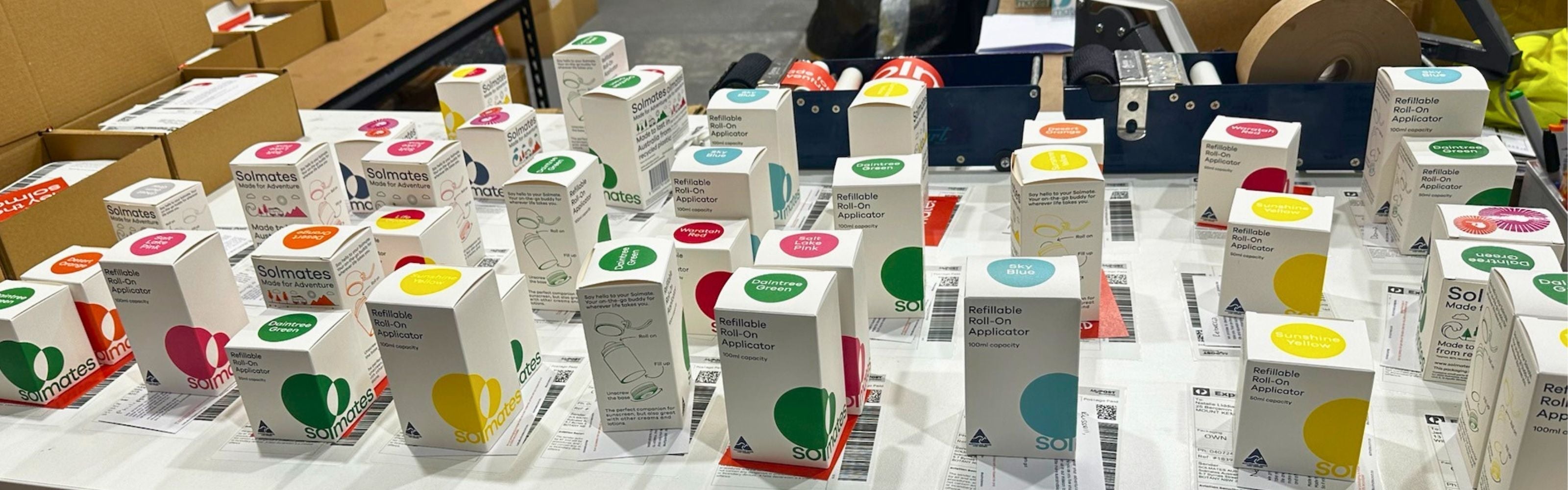
That's exactly why making sunscreen as frictionless as possible matters so much. A product that's quick, clean and easy to apply is one you'll actually use. A roll-on applicator like a Solmates is designed with this in mind - the sunscreen goes on evenly without sticky hands, and it's compact enough to keep in your bag, your car, or on your desk for reapplication throughout the day.
Here's what a sun-safe daily routine looks like, year-round:
- Morning: Apply SPF 50+ sunscreen to exposed skin (face, neck, hands, arms) before leaving the house - every day when the UV Index is 3 or above.
- On the go: Keep sunscreen in your bag or car for reapplication, especially before midday outdoor activity.
- In winter: Check the SunSmart app or Bureau of Meteorology for UV levels, especially in the cooler months when it's easy to forget.
- When driving: Make sure you apply sunscreen, in particular, on the right side of your face, neck and arm before getting in the car - especially for long drives or morning commutes.
The Slip-Slop-Slap Mindset, All Year Long
Australia's Slip-Slop-Slap campaign has been around since 1981, and for good reason - it works. Sun-safe behaviour has contributed to declining melanoma rates in younger Australians under 40. But the habit still tends to drop off outside of summer, when the perceived need feels lower.
The science is clear: skin damage is cumulative. Every UV exposure - summer or winter, beach or school run, clear day or overcast - adds to your lifetime total. The earlier and more consistently you protect your skin, the more you reduce your long-term risk. So next time you're reaching for your keys on a crisp winter morning, add one more thing to the routine. Your future skin will thank you.